PLANO, Texas ---- Christ Church Episcopal states it will leave the denomination because it opposes the national direction of the church.
The conservative Plano parish announced its plan Monday, a week after the Episcopal General Convention rejected demands from fellow Anglicans overseas and conservatives at home that they stop consecrating gay bishops for now. Delegates instead voted to call for restraint in future elections.
The convention also chose a new presiding bishop, Nevada Bishop Katharine Jefferts Schori, who voted in 2003 to confirm V. Gene Robinson of New Hampshire, the first openly gay bishop, and supports creating prayer services to bless same-gender couples.
"The mission of Christ Church is to make disciples and teach them to obey the commands of Christ," Christ Church leaders said in a statement. "The direction of the leadership of the Episcopal Church is different and we regret their departure from biblical truth and the historic faith of the Anglican Communion. ... We declare our intention to disassociate from ECUSA as soon as possible."
A spokesman for the Episcopal Church did not respond to a request for comment. The denomination is the U.S. branch of the global Anglican Communion.
The Plano church is one of the largest Episcopal churches in the nation, drawing about 2,200 worshippers each weekend to the Dallas suburb.
Under Episcopal rules, parishes cannot take their property when they leave. But Dallas Bishop James Stanton, who also opposed Robinson's consecration, said he intends to allow the congregation to continue using the building.
The Rev. David Roseberry, Christ Church pastor, said specifics of how the parish will leave the denomination will be decided in the coming weeks. Christ Church said it still regards the Dallas bishop as its "apostolic leader."
[Note: Well, I guess we will miss them. :( A church here in our own diocese of Kansas also pulled the plug several months ago. Christ Church (coincidentally the same name) in Overland Park, Kansas decided they could not work with the way things are going either, so they decided to pull out. Overland Park is a suburb of Kansas City, MO. A lot of us in the southeastern part of the state refer to the Johnson County area (OP and other Kansas suburbs of KC metro) look at that whole part of the state as Marshmallow land. PAT]


Friday, June 30, 2006


Tuesday, June 27, 2006
An Interview With Bishop Katharine Jefferts Schori
WEB EXCLUSIVE:
Interview with Bishop Katharine Jefferts Schori
June 21, 2006
RELIGION & ETHICS NEWSWEEKLY correspondent and program managing editor Kim
Lawton spoke to Presiding Bishop-Elect Katharine Jefferts Schori on June 20
in one of the first in-depth interviews the bishop has given since her landmark election. Excerpts from this conversation will be included in this week's edition
of the show (to be distributed Friday, June 23) as part of a larger story on the convention.
KIM LAWTON: You mentioned right away after your election that you saw the church as having an opportunity to be the vehicle for the reign of God. And I just wanted you to tell us a little bit more about what you see, what is that vision of the church?
Bishop KATHARINE JEFFERTS SCHORI (Presiding Bishop-Elect, U.S. Episcopal Church): Well, the church is a community that is really called to transform the world around it. That takes different forms in different places. Each one of us has got a piece to play in that kind of work. And the fact that this General Convention has adopted justice and peace as its first priority for mission in the coming triennium, particularly focused on the UN Millennium Development Goals, gives us an enormous opportunity to be part of building something that looks very much like the reign of God that's achievable in our own day.
LAWTON: Are you very mindful of the magnitude of what you are lurching into?
Bishop JEFFERTS SCHORI: Probably not fully. I'm sure that I will have much to learn that I don't even know about. But I think life is meant to be challenging. If we're going to use the fullness of the gifts that we've been given, it means we have to continue to be stretched. And I look forward to that.
LAWTON: What message does your election send to all the quarters of the Episcopal Church?
Bishop JEFFERTS SCHORI: This is not your grandmother's church anymore. When I was growing up, girls and women could only do things like sing in the choir and serve on the altar guild. And singing's not my great strength, so I had no concept of being active in leadership in the church when I was growing up.
LAWTON: And what about for the rest of the communion? What message, what signal do you hope this sends to other members of the Anglican Communion?
Bishop JEFFERTS SCHORI: I hope that our decisions at this General Convention send several messages to the rest of the communion: that we are incredibly anxious to be, to continue to be, part of the communion; that we are fully committed to partnerships across the globe; that we firmly believe that all people need to be included in the reign of God that is being built; that people of all colors and races and nations and language groups and sexual orientations are fully part of this creation that God has blessed us with.
LAWTON: What do you anticipate saying to some of the primates at your first meeting, including some that you know have problems with women being ordained? What can you imagine yourself saying to them?
Bishop JEFFERTS SCHORI: One would probably begin with "hello," to begin to build some kind of relationship, speaking about each other's contexts, who am I, where do I come from, what kind of history do I bring, what kind of theology do I understand that this church is being called to? And we cannot have substantive conversations until we know each other as human beings.
LAWTON: Some people say that this has been a real crucial time for the Anglican Communion just in terms of reexamining what Anglicanism means today in this world. Do you think that is going on right now?
Bishop JEFFERTS SCHORI: Yes it is, and I think it goes on in every age. Anglicanism has grown out of a history of struggle and tension. The great Elizabethan compromise that produced the Church of England was born out of incredible strife, but it has been a gift to many, many people around the globe.
LAWTON: And so in what way do you see, you know, what are some of the critical issues that global Anglicans need to be examining right now?
Bishop JEFFERTS SCHORI: We need to be examining the poverty that is real around the world. We need to be examining the fact that our brothers and sisters, Anglican and not, in places like Africa and Asia don't have enough to eat. Their children don't have the opportunity to go to school. AIDS and tuberculosis and malaria are rampant in many parts of this world and people with those diseases don't have access to adequate health care. That's where our focus needs to be.
LAWTON: Clearly, one of the big challenges, the big issue is the sexuality debates. What message do you hope that this convention sends to people who are very upset about the consecration of Gene Robinson and are really opposed to same-sex, the blessing of same-sex unions? What signal do you hope they get from this convention?
Bishop JEFFERTS SCHORI: That there is room for them at this table as well.
LAWTON: And what about for gay and lesbian members of the church who are concerned that maybe there is a backing away, that maybe they're being, in some way being called to make sacrifices for the sake of unity that aren't just, for a church that's emphasizing justice? What do you hope they hear from this?
Bishop JEFFERTS SCHORI: The same message, that there is room for them at this table as well, that God calls all of us to this bountiful table to share in the riches of creation that were given for all.
LAWTON: There've been some pretty pointed statements publicly from some of the conservative bishops and other leaders of that wing of the church, really raising questions about whether indeed everybody can stay at the table and whether this is a time when that is no longer possible. Do you feel that reconciliation is still possible, and what will you do to try and make that happen?
Bishop JEFFERTS SCHORI: Reconciliation is always possible. The Christian faith is about the eternity of hope. Once we give up hope, I think we cease to become active, engaged Christians. If we have no hope, we have repudiated the basis of our faith. There is always the possibility of reconciliation, resurrection, renewal. And once we lose a sense of that in a very deep way, we have challenged the very foundations of our faith. If -- if the resurrection, the reconciliation may come beyond the grave, but we insist that it is always possible.
LAWTON: Talk about the transition, oceanographer turned bishop. What led to that?
Bishop JEFFERTS SCHORI: Well, I knew I was supposed to go fishing, and it took me a while to figure out just what for. Christians often talk about being sent to fish for people; the gospel is about drawing all people into the reign of God. When it became apparent that I was not going to be able to continue to be an active oceanographer, that if I wanted to continue in the field it was going to be as a grants writer and hustling grant money, right at the very same time, three people in my congregation asked me if I'd ever thought about being a priest, just out of the blue. It seemed absurd, it seemed unfitting to the gifts that I recognized at the time. But I went and spoke at great length with the priest in that congregation and came to the conclusion that, at least, the time wasn't right. But five years later, I was asked to preach on a Sunday morning when he wasn't going to be there -- a new rector. And that experience and the response that I had to that experience finally let me say yes. And I was in seminary the next fall.
LAWTON: Describe some of your emotions on Sunday [the day she was elected the first female presiding bishop]. What gamut did they run?
Bishop JEFFERTS SCHORI: It was a long and challenging day -- to sit waiting, to recognize that this election might possibly call me into this office. I think we were all surprised, all of us.
LAWTON: And I have a personal question for you. Just, a lot of people have different practices to maintain their own spiritual spark, you know, and to maintain that, and I'm just wondering if you'd be willing to share what's most meaningful for you? How do you get your best connection with God?
Bishop JEFFERTS SCHORI: I've always found a great sense of spirituality in the out-of-doors. I ground myself as a creature in the midst of the natural created order. And taking Sabbath time is exceedingly important to me, taking time away, and I bring all of those together in seeking solitude in the wilderness. The wilderness is a place of great gifts. It may be threatening to some people; it ought to be threatening, I think, in some important way. But it is a place where I discover God, and what God is calling me to do and be.
http://www.pbs.org/wnet/religionandethics/
week942/exclusive.html
Gay Pride Reports From Everywhere
America celebrates Pride
Adam Goldman, Associated Press
SUMMARY: A mending Kevin Aviance joins N.Y.'s lesbian council speaker and hundreds of thousands of others to mark Pride and the ongoing fight for rights.
NEW YORK -- Drag queens in knee-high boots, kids with two dads and New York City's first openly gay city council speaker were among hundreds of thousands attending Gay Pride parades across the nation, weeks after a vicious attack on a popular gay singer and the 25th anniversary of the start of the AIDS epidemic.
Tens of thousands of spectators lined New York's Fifth Avenue on Sunday for the city's annual parade, withstanding intermittent rain and turning the route into a sea of rainbows with colorful floats and lavish costumes.
"Everyone else has a chance to express their affection freely, and for one day in New York, you can be free and not feel ashamed or embarrassed," said 42-year-old Roberto Hermosilla, from Miami, attending his ninth Pride parade.
On San Francisco's Market Street, thousands of festively dressed people looked on as marching bands, dancers and floats bearing corporate logos streamed by. On one float, a bearded man wearing a white lace miniskirt and fishnet stockings sang Madonna's "Like a Virgin." A half-dozen men dressed in underwear and top hats danced behind him.
The parades also had a political message, with parade-goers bearing slogans about same-sex marriage, AIDS and discrimination.
"It's to have a good time, but also to remember the issues out there," said Jane Woodman, 26, in San Francisco. "There's still a lot of work to be done," she said, noting the national debate raging over whether gays should have a legal right to marry.
The New York parade marked the very public and triumphant return of singer Kevin Aviance, who rolled down Fifth Avenue atop a fake pachyderm and a circus-themed float just weeks after he was viciously beaten and his jaw broken. Police have charged four young men with assaulting the artist while yelling anti-gay slurs.
The theme of New York's Lesbian, Gay, Bisexual and Transgender Pride March was "The Fight for Love and Life," but there was plenty of talk about hate following the Aviance attack. The New York Police Department said reports of anti-gay bias crimes totaled 25 through mid-June -- compared with 19 over the same period in 2005.
"A few hateful homophobes will not set us back," said City Council Speaker Christine Quinn, who marched in the parade. In January, Quinn became the first woman and first openly gay person to lead the council.
Organizations that marched in San Francisco included Rocket Dog Rescue, a volunteer group that helps abandoned dogs find homes. One marcher with the group walked with a pit bull that was dressed in a rainbow tutu.
In Ohio on Saturday, thousands gathered for the 25th Stonewall Columbus parade. Michael Eblin, marching in his first parade, followed a black Hummer pulling a float of men.
"For the first time, I'm going to be part of a majority," the 18-year-old Eblin said just before the parade began.
Along the route, protesters held large signs reading, "Homo sex is sin" and "God abhors you," while a boy in blue tie-dye held up another: "2 Moms. 2 Dads. Too Cool."
The parades commemorate the Stonewall uprising of 1969, when gay bar patrons resisted a police raid.
Associated Press writer Dan Goodin in San Francisco contributed to this report.
If you'd like to know more, you can find stories related to America celebrates gay pride
Copyright © 2006 Planet Out.
Sunday, June 25, 2006
Gay Pride Day Around the World
Rain can't dim N.Y. gay pride parade
ADAM GOLDMAN, Associated Press Writer
Tens of thousands of raucous parade-goers braved a steady downpour and lined Fifth Avenue on Sunday for the annual gay pride parade, an event that comes just weeks after an attack on a popular gay singer and the 25th anniversary of the start of the AIDS epidemic.
Outrageous costumes were abundant all along the parade route, including men in short skirts and tiaras and long-legged drag queens in knee-high boots. The floats and marchers also turned Fifth Avenue into a sea of rainbows.
"Everyone else has a chance to express their affection freely, and for one day in New York, you can be free and not feel ashamed or embarrassed," said Roberto Hermosiloa of Miami, who was attending his ninth parade.
It was one of several gay pride parades around the country this weekend, including a similar-size one in San Francisco.
The theme of New York's Lesbian, Gay, Bisexual and Transgender Pride March was "The Fight for Love and Life," but there was plenty of talk about hate following the suspected gay-bashing attack of singer Kevin Aviance last month in Manhattan. Aviance has recovered and was expected to take part in the parade.
"A few hateful homophobes will not set us back," said City Council Speaker Christine Quinn, who is openly gay and marched in the parade.
The parade also took place just weeks after the 25th anniversary of the start of the AIDS epidemic, and city leaders used the event to call for a greater focus on combating HIV and AIDS.
On Saturday, thousands gathered for the 25th Stonewall Columbus parade in Ohio. Michael Eblin, marching in his first parade, followed a black Hummer pulling a float of men. A cross-dresser in a beaded white gown perched atop the vehicle, holding a sign reading "The Closet."
"For the first time, I'm going to be part of a majority," the 18-year-old Eblin said just before the parade began.
A boy along the route wearing blue tie-dye held up a sign: "2 Moms. 2 Dads. Too Cool."
The New York parade attracted diverse segments of the gay community. One contingent was a group of former and current yeshiva students who held up signs saying, "Jewish? Orthodox? Gay? You are not alone."
The parades commemorate the Stonewall uprising of 1969, when patrons of a New York gay bar resisted a police raid.
The New York Police Department said reports of anti-gay bias crimes totaled 25 through mid-June — compared with 19 over the same period in 2005.
But Clarence Patton, executive director of the New York City Gay & Lesbian Anti-Violence Project, said anti-gay and transgender incidents tend to spike in June because of the high-profile events that are held such as the parade.
"It's like the apex of gay visibility," he said.
Copyright © 2006 The Associated Press.
And there have been Gay Pride demonstrations and parades in countless cities around the United States and elsewhere in the world over this weekend. In addition to the parade in New York City, there is also one going on this afternoon in San Francisco, and in Chicago -- among many others. PAT
Saturday, June 24, 2006
Breaking Up Still no Simple Matter For Embattled Anglicans
By: BRIAN MURPHY - Associated Press
The obituary-in-waiting for the Anglican Communion goes something like this: A nearly 500-year-old worldwide fellowship of Christian churches splits apart over disputes about gay clergy -- and American liberals get most of the blame.
It's a crisp, tidy farewell. But one that may not prove true, even as gloomy predictions were rampant after the U.S. Episcopal Church wrapped up a gathering Wednesday without coming close to meeting demands of conservatives across the 77 million-member communion.
Powerful considerations -- both practical and theological -- still stand in the way of one of the biggest meltdowns in Christian unity since the 16th century Reformation, clerics and scholars say.
"The problems are very, very deep," said Canon Martyn Minns, rector of Truro Church in Fairfax, Va., and a leader of the conservative bloc at the Episcopal meeting in Columbus, Ohio. "But I don't share the view that it's moving toward a decisive break. That's not how we do things."
What's more likely, many experts say, is a continued erosion from within -- an implosion rather than explosion.
This could fold Anglicanism's big tent, the denominations rooted in the Church of England and roughly stretching across former British colonies and the old Empire. In its place, the 38 Anglican provinces might stay linked, but in name only -- each going their own way on key issues including same-sex blessings, women clergy and the ordination of openly gay priests and bishops.
"Anglicanism, as we know it, would no longer exist," said the Rev. Peter Moore, dean emeritus at the conservative Trinity Episcopal School for Ministry in Ambridge, Pa. "Something else would take its place."
The Episcopal delegates made it clear they relish their independence. The assembly rebuffed Anglican demands to temporarily halt electing gay bishops. In the final hours of the meeting, they approved a nonbinding, and vaguely worded, compromise resolution to "exercise restraint" when considering bishop candidates whose lifestyle "presents a challenge" to the communion.
But it falls far short of the moratorium proposal, which was suggested by top Anglican officials as a way to ease anger among conservatives following the 2003 election of Bishop V. Gene Robinson of New Hampshire, who lives with his longtime male partner.
Anglican traditionalists, led by African clerics, consider homosexuality a violation of Scripture and accuse gay clergy supporters of driving a wedge into the communion. Gay advocates counter that the conservatives are the dividers, by demanding a uniform view of Scripture in a communion that has welcomed a diversity of views.
Conservatives received a further jolt last Sunday when the Episcopal leadership selected Nevada Bishop Katharine Jefferts Schori as the first women ever to head an Anglican province. Some conservative Anglican strongholds, such as Nigeria and Tanzania, do not permit the ordination of women.
The forecasts for the communion now carry an extra dose of bleakness.
Bishop Michael Nazir-Ali, of Rochester in England, was quoted as saying "virtually two religions" now exist between conservatives and liberals.
"A schism exists right now," said the Rev. George Curry, chairman of the Church Society, a conservative Anglican group based in Britain. "Everyone must recognize that the Anglican Communion is fractured beyond repair."
So what's holding up the big crumble?
For one, there is no structure within the communion to expel a member church. Anglican tradition is based on broad-brush inclusion built around common prayer and worship styles. Archbishop of Canterbury Rowan William acts as the spiritual leader, but has no power to punish or make doctrine.
"There's no way to really stop someone from being an Anglican," said Paul Handley, editor of the Church Times, a London-based weekly that covers Anglican affairs.
This leaves conservatives facing a decision on whether to walk out on their own. The threats are there, but so are the consequences.
Breakaway churches -- especially in Africa or the small conservative factions in the United States -- would immediately lose their stature and voice as part of a global religious group. Crucial financial assistance to African provinces could dry up. Disputes over church property might drag on for years and amass huge legal fees.
The Rev. Colin Slee, dean of Southwark Cathedral in London, called the "apocalyptical visions" for the communion overblown and part of conservative power plays "to push their agenda."
Also, no one seems to want the responsibility of toppling one of the institutional pillars of Christianity.
The Anglican Communion is the most tightly knit global Christian community to emerge from the Reformation-era breaks with the Vatican that also produced Lutherans and other mainline Protestant denominations. In recent decades, Anglican leaders have played a central role in efforts to forge wider Christian fellowship, including closer bonds with Roman Catholics and Orthodox churches.
"The Anglicans are the only team that Protestants have in the field that have this worldwide, organic unity," said David Steinmetz, a professor of Christian history at Duke Divinity School.
The Anglican struggle also represents a larger trend across Christianity: the waning influence of the West and the rapidly expanding clout of the former missionary churches in the "Global South."
The message from an Anglican rupture is one every Christian leader wants to avoid -- that "old and new" Christianity cannot work together, noted Moore of the Trinity Episcopal School.
"What you have is a tragic situation developing. The split ... would take place along the lines of the North-South, rich-poor, white-non-white, educated versus the developing world," Moore said. "It's a split the Body of Christ does not need."
On the Net:
Anglican Communion: Anglican Communion Web Page
Friday, June 23, 2006
Book Review: The 'Religious Right' and Balmer's Book Thy Kingdom Come
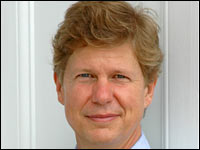 Morning Edition, June 23, 2006 · President Bush and the Republican Party find strong support among evangelical voters. But in his new book, Thy Kingdom Come, author Randall Balmer says that allegiance is misplaced.
"I don't find much that I recognize as Christian" in the religious right, says Balmer, a professor of religion at Barnard College, Columbia University and contributing editor to Christianity Today.
He says blind allegiance to the Republican Party has distorted the faith of politically active evangelicals, leading them to misguided positions on issues such as abortion and homosexuality.
"They have taken something that is lovely and redemptive and turned it into something that is ugly and retributive," Balmer says.
He argues that modern evangelicals have abandoned the spirit of their movement, which was founded in 19th-century activism on issues that helped those on the fringes of society: abolition, women's suffrage and universal education.
"I don't find any correlation in the agenda of the religious right today," Balmer says.
 Book Excerpt: Thy Kingdom Come by Randall Balmer
NPR.org, June 22, 2006 · In the 1980s, in order to solidify their shift from divorce to abortion, the Religious Right constructed an abortion myth, one accepted by most Americans as true. Simply put, the abortion myth is this: Leaders of the Religious Right would have us believe that their movement began in direct response to the U.S. Supreme Court's 1973 Roe v. Wade decision. Politically conservative evangelical leaders were so morally outraged by the ruling that they instantly shed their apolitical stupor in order to mobilize politically in defense of the sanctity of life. Most of these leaders did so reluctantly and at great personal sacrifice, risking the obloquy of their congregants and the contempt of liberals and "secular humanists," who were trying their best to ruin America. But these selfless, courageous leaders of the Religious Right, inspired by the opponents of slavery in the nineteenth century, trudged dutifully into battle in order to defend those innocent unborn children, newly endangered by the Supreme Court's misguided Roe decision.
It's a compelling story, no question about it. Except for one thing: It isn't true.
Although various Roman Catholic groups denounced the ruling, and Christianity Today complained that the Roe decision "runs counter to the moral teachings of Christianity through the ages but also to the moral sense of the American people," the vast majority of evangelical leaders said virtually nothing about it; many of those who did comment actually applauded the decision. W. Barry Garrett of Baptist Press wrote, "Religious liberty, human equality and justice are advanced by the Supreme Court abortion decision." Indeed, even before the Roe decision, the messengers (delegates) to the 1971 Southern Baptist Convention gathering in St. Louis, Missouri, adopted a resolution that stated, "we call upon Southern Baptists to work for legislation that will allow the possibility of abortion under such conditions as rape, incest, clear evidence of severe fetal deformity, and carefully ascertained evidence of the likelihood of damage to the emotional, mental, and physical health of the mother." W.A. Criswell, former president of the Southern Baptist Convention and pastor of First Baptist Church in Dallas, Texas, expressed his satisfaction with the Roe v. Wade ruling. "I have always felt that it was only after a child was born and had a life separate from its mother that it became an individual person," the redoubtable fundamentalist declared, "and it has always, therefore, seemed to me that what is best for the mother and for the future should be allowed."
The Religious Right's self-portrayal as mobilizing in response to the Roe decision was so pervasive among evangelicals that few questioned it. But my attendance at an unusual gathering in Washington, D.C., finally alerted me to the abortion myth. In November
1990, for reasons that I still don't entirely understand, I was invited to attend a conference in Washington sponsored by the Ethics and Public Policy Center, a Religious Right organization (though I didn't realize it at the time). I soon found myself in a conference room with a couple of dozen people, including Ralph Reed, then head of the Christian Coalition; Carl F. H. Henry, an evangelical theologian; Tom Minnery of Focus on the Family; Donald Wildmon, head of the American Family Association; Richard Land of the Southern Baptist Convention; and Edward G. Dobson, pastor of an evangelical church in Grand Rapids, Michigan, and formerly one of Jerry Falwell's acolytes at Moral Majority. Paul M. Weyrich, a longtime conservative activist, head of what is now called the Free Congress Foundation, and one of the architects of the Religious Right in the late 1970s, was also there.
In the course of one of the sessions, Weyrich tried to make a point to his Religious Right brethren (no women attended the conference, as I recall). Let's remember, he said animatedly, that the Religious Right did not come together in response to the Roe decision. No, Weyrich insisted, what got us going as a political movement was the attempt on the part of the Internal Revenue Service (IRS) to rescind the tax-exempt status of Bob Jones University because of its racially discriminatory policies.
Bob Jones University was one target of a broader attempt by the federal government to enforce the provisions of the Civil Rights Act of 1964. Several agencies, including the Equal Employment Opportunity Commission, had sought to penalize schools for failure to abide by antisegregation provisions. A court case in 1972, Green v. Connally, produced a ruling that any institution that practiced segregation was not, by definition, a charitable institution and, therefore, no longer qualified for tax-exempt standing.
The IRS sought to revoke the tax-exempt status of Bob Jones University in 1975 because the school's regulations forbade interracial dating; African Americans, in fact, had been denied admission altogether until 1971, and it took another four years before unmarried African Americans were allowed to enroll. The university filed suit to retain its tax-exempt status, although that suit would not reach the Supreme Court until 1983 (at which time, the Reagan administration argued in favor of Bob Jones University).
Initially, I found Weyrich's admission jarring. He declared, in effect, that the origins of the Religious Right lay in Green v. Connally rather than Roe v. Wade. I quickly concluded, however, that his story made a great deal of sense. When I was growing up within the evangelical subculture, there was an unmistakably defensive cast to evangelicalism. I recall many presidents of colleges or Bible institutes coming through our churches to recruit students and to raise money. One of their recurrent themes was,We don't accept federal money, so the government can't tell us how to run our shop—whom to hire or fire or what kind of rules to live by. The IRS attempt to deny tax-exempt status to segregated private schools, then, represented an assault on the evangelical subculture, something that raised an alarm among many evangelical leaders, who mobilized against it.
For his part, Weyrich saw the evangelical discontent over the Bob Jones case as the opening he was looking for to start a new conservative movement using evangelicals as foot soldiers. Although both the Green decision of 1972 and the IRS action against Bob Jones University in 1975 predated Jimmy Carter's presidency, Weyrich succeeded in blaming Carter for efforts to revoke the taxexempt status of segregated Christian schools. He recruited James Dobson and Jerry Falwell to the cause, the latter of whom complained, "In some states it's easier to open a massage parlor than to open a Christian school."
Weyrich, whose conservative activism dates at least as far back as the Barry Goldwater campaign in 1964, had been trying for years to energize evangelical voters over school prayer, abortion, or the proposed equal rights amendment to the Constitution. "I was trying to get those people interested in those issues and I utterly failed," he recalled in an interview in the early 1990s. "What changed their mind was Jimmy Carter's intervention against the Christian schools, trying to deny them tax-exempt status on the basis of so-called de facto segregation."
During the meeting in Washington, D.C., Weyrich went on to characterize the leaders of the Religious Right as reluctant to take up the abortion cause even close to a decade after the Roe ruling. "I had discussions with all the leading lights of the movement in the late 1970s and early 1980s, post–Roe v. Wade," he said, "and they were all arguing that that decision was one more reason why Christians had to isolate themselves from the rest of the world."
"What caused the movement to surface," Weyrich reiterated,"was the federal government's moves against Christian schools." The IRS threat against segregated schools, he said, "enraged the Christian community." That, not abortion, according to Weyrich, was what galvanized politically conservative evangelicals into the Religious Right and goaded them into action. "It was not the other things," he said.
Ed Dobson, Falwell's erstwhile associate, corroborated Weyrich's account during the ensuing discussion. "The Religious New Right did not start because of a concern about abortion," Dobson said. "I sat in the non-smoke-filled back room with the Moral Majority, and I frankly do not remember abortion ever being mentioned as a reason why we ought to do something."
During the following break in the conference proceedings, I cornered Weyrich to make sure I had heard him correctly. He was adamant that, yes, the 1975 action by the IRS against Bob Jones University was responsible for the genesis of the Religious Right in the late 1970s. What about abortion? After mobilizing to defend Bob Jones University and its racially discriminatory policies, Weyrich said, these evangelical leaders held a conference call to discuss strategy. He recalled that someone suggested that they had the makings of a broader political movement—something that Weyrich had been pushing for all along—and asked what other issues they might address. Several callers made suggestions, and then, according to Weyrich, a voice on the end of one of the lines said, "How about abortion?" And that is how abortion was cobbled into the political agenda of the Religious Right.
The abortion myth serves as a convenient fiction because it suggests noble and altruistic motives behind the formation of the Religious Right. But it is highly disingenuous and renders absurd the argument of the leaders of Religious Right that, in defending the rights of the unborn, they are the "new abolitionists." The Religious Right arose as a political movement for the purpose, effectively, of defending racial discrimination at Bob Jones University and at other segregated schools. Whereas evangelical abolitionists of the nineteenth century sought freedom for African Americans, the Religious Right of the late twentieth century organized to perpetuate racial discrimination. Sadly, the Religious Right has no legitimate claim to the mantle of the abolitionist crusaders of the nineteenth century. White evangelicals were conspicuous by their absence in the civil rights movement of the 1950s and 1960s. Where were Pat Robertson and Jerry Falwell and Billy Graham on August 28, 1963, during the March on Washington or on Sunday, March 7, 1965, when Martin Luther King Jr. and religious leaders from other traditions linked arms on the march from Selma to Montgomery, Alabama, to stare down the ugly face of racism?
Falwell and others who eventually became leaders of the Religious Right, in fact, explicitly condemned the civil rights movement. "Believing the Bible as I do," Falwell proclaimed in 1965, "I would find it impossible to stop preaching the pure saving gospel of Jesus Christ, and begin doing anything else—including fighting Communism, or participating in civil-rights reforms." This makes all the more outrageous the occasional attempts by leaders of the Religious Right to portray themselves as the "new abolitionists" in an effort to link their campaign against abortion to the nineteenth century crusade against slavery.
Excerpted from Thy Kingdom Come: How the Religious Right Distorts the Faith and Threatens America
Copyright © 2006 by Randall Balmer.
Thursday, June 22, 2006
Dimwit Homophobe Starts Fire in Library Reading Room
Fire started in Chicago library's gay books section
June 15, 2006
BY ANNIE SWEENEY Crime Reporter
Chicago Police are investigating a suspicious fire that burned about 100 books from the gay and lesbian selection at a North Side Chicago Public Library branch.
The small fire at the John Merlo branch, 644 W. Belmont, ignited about noon Tuesday and the cause remained under investigation, officials said.
Detectives were not investigating the fire as a hate crime, Chicago Police Department spokeswoman Monique Bond said. But gay rights activist Rick Garcia was concerned that it might be, given the subject matter. "It wasn't the history section," he said.
Bond said the fire was under investigation as an arson.
The fire was set on the second floor of the library in a remote corner, and the section is not marked by any sign reading "gay and lesbian," sources said.
After the fire was discovered, library staff evacuated patrons to safety on the first floor, said Margaret Killackey, a library spokeswoman.
The gay and lesbian collection includes roughly 1,000 books ranging from history and athletics to travel and culture, and it was almost entirely destroyed, Killackey said.
asweeney@suntimes.com
Copyright 2006 © The Sun-Times Company
Note: Well, that's one way to handle things. If the faggots won't go away on their own, then burn them out. We've seen many churches with an emphasis on serving GLBT people burned down by homophobes, why not the libraries and schools as well? Of course Chicago Police are not going to treat it as a hate crime; they do not believe in 'special rights for gay people' as a police officer once stated to me. PAT
See a follow up report here in July 29, 2006. The woman who started this fire was caught by Chicago Police. It was a homeless woman who had been living in or around the library. PAT
Final 'Gay' Resolution Leaves No One Happy
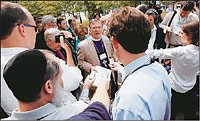
Bishop Robert Duncan at a press conference following the compromise solution reached Wednesday afternoon.
‘Restraint’ urged in allowing gay bishops
Rita Price and Felix Hoover
THE COLUMBUS DISPATCH
In a last-gasp effort to preserve its place in the worldwide Anglican Communion, the Episcopal Church called on leaders yesterday to show "restraint" when considering gay bishop candidates.
Supporters of the resolution, passed just hours before the nine-day General Convention ended in Columbus, say they want to keep doors open for the denomination’s many gay members.
At the same time, they’re trying to appease conservative Anglican leaders who have warned of a schism unless the U.S. church enacts a gay-bishop moratorium and apologizes for the 2003 consecration of V. Gene Robinson, an openly gay bishop from New Hampshire.
The not-so-delicate balance left many unhappy.
"We’re again in quite a muddle," said Bishop Robert Duncan of Pittsburgh, a leader of the conservative wing of the U.S. church.
Bishop Dorsey F. Henderson Jr. of the Diocese of Upper South Carolina, head of the special committee that studied the church’s response to the Anglican demands, acknowledged that the action did not please either side.
But he said the Episcopal Church wanted to find a way to maintain discussions and membership with the larger, worldwide body.
"It’s a heartbreak for a lot of people," Henderson said. "For gays and lesbians, who think the response was too much. For conservatives, who thought it too little."
The compromise was introduced and first passed in the House of Bishops. It then passed in the House of Deputies, a body of more than 800 clergy and laypeople who had defeated a stronger version of the legislation a day earlier.
The Rev. Heather Buchanan Wiseman of Cincinnati, a deputy from the Diocese of Southern Ohio, voted against Tuesday’s resolution but supported the newer resolution after listening to pleas from outgoing Presiding Bishop Frank Griswold and from Presiding Bishop-elect Katherine Jefferts Schori.
"They came to us and said we need to keep the conversation open. We needed to make that sacrifice," Wiseman said. "We voted with tears in our eyes."
Jefferts Schori, the first woman leader of the 2.2-million member denomination, likened the Episcopal Church in America and the Anglican Communion overseas to "conjoined twins."
Doctors don’t separate them unless "both can live full lives," she told deputies. "I think we are in a church much like that."
Jefferts Schori said she remains committed to the inclusion of gays, but she urged acceptance of the resolution asking Episcopal leaders to "exercise restraint by not consenting to the consecration" of candidates whose "manner of life presents a challenge to the wider church."
Conservatives were upset that the nonbinding resolution did not mention homosexuality or same-sex union blessings. They said it leaves sufficient wiggle room for dioceses to choose more gay bishops.
Gay advocates saw it as plenty restrictive.
"Obviously I’m disappointed, and I think we disagree about the way in which we can best be able to continue the conversation," Robinson said.
He said he had doubts about whether the church really would split because of gay bishops. But Robinson said he wants to trust leaders who said the action had to be taken to salvage unity.
"I hope and pray that the personal sacrifice will be honored for what it was," he said. "And I ask: Are they (Anglican leaders) really going to be in conversation with us? "
In a statement released after the vote, Rowan Williams, the archbishop of Canterbury —leader of the Anglican Communion — hedged his answer.
Williams had urged the General Convention to respond to the demands set forth in the Windsor Report. That 2004 document called on Episcopal leaders to place a moratorium on gay bishops, to stop blessing same-sex union ceremonies and to apologize for the turmoil caused by Robinson’s consecration.
The church took no action during the convention on same-sex blessings. It expressed regret for the pain caused, but not for the consecration of Robinson.
"It is not yet clear how far the resolutions passed this week and today represent the adoption by the Episcopal Church of all the proposals set out in the Windsor Report," Williams said.
"The wider communion will therefore need to reflect carefully on the significance of what has been decided before we respond more fully."
Some conservative leaders said additional defections from the moderate-to-liberal U.S. church are certain. "Many laity will now leave. Clergy will now leave. Parishes that have been waiting will now leave," said the Rev. Canon David C. Anderson, of the American Anglican Council.
Bishop Kenneth Price of the Diocese of Southern Ohio said he also expects liberal dioceses to look for the broadest interpretation of the resolution. Dioceses elect their own bishops.
"We may over the next three years see some tests of this," Price said.
Robinson said nine days of wrangling and politicking took a toll on both the convention and its participants.
"I feel sorriest for those who voted ‘yes’ on that resolution and did so knowing it wasn’t what is in their hearts," he said.
"I’d rather be me than them tonight. I can go to bed with a clear conscience."
Tuesday, June 20, 2006
Book Review: New Book on Bishop Robinson
Going to Heaven: The Life and Election of Bishop Gene Robinson
by Elizabeth Adams
1-933368-22-5
Trade Paper 6 x 9
Biography 308 pp. $14.95
To be Published on July 28th 2006
An exploration of the man—Gene Robinson, the world's first openly gay Episcopal bishop—who many believe will be the catalyst for the breaking apart of the Episcopal Church.
It may be a uniquely American success story: not long ago, who would have thought that the son of tobacco sharecroppers in Kentucky could become an Episcopal bishop? No one could have predicted that this boy, born poor, ill, and given little chance of survival, would in fact be elected and ordained 56 years later as the first openly gay bishop in Christendom, finding himself at the center of unprecedented positive and negative reaction in the religious world and beyond.
Gene Robinson’s life is a compelling story of challenges overcome by hard work, intelligence, humor, love, and deep faith. It is also a story of one man’s journey into his own “otherness”; of courage found and integrity retained; and the emergence of a ministry that speaks to countless people who believe in a Gospel of love and inclusion, and want the church to reflect that vision.
Through a lively text based on extensive interviews with Bishop Robinson, his closest associates, family, colleagues, and observers, and illustrated with photographs from all phases of his life, this book paints a portrait of Bishop Robinson not as a symbol but a human being who is, as he puts it, “neither the angel nor the devil some would make me out to be.” It illuminates his life; his struggle with—and eventual acceptance of—his sexual orientation; his calling to become a priest and later a bishop.
It tells the story of the critical, central events of his election and consecration amid intense opposition, huge security concerns, and media attention. The book follows him through the next two years as he juggles dual roles—Bishop of New Hampshire, and symbol of gay achievement and the progressive church— while the opposition stirred by his election creates increasing pressure for schism in the Episcopal Church of the United States and the Anglican Communion worldwide.
The book concludes with a discussion of the deep theological and historical significance of Gene Robinson’s election and personal vision for the future, and what this means both for individuals and for a Church seeking to be relevant in a today’s world.
Elizabeth Adams has been granted unique, extraordinary access to Bishop Robinson and the events and people surrounding him. She also has significant knowledge about the Episcopal Church gained through lifelong membership and active participation, and has been an observer, writer, and speaker for many years about the interface between religion and contemporary life and politics.
Read a sample chapter on line here .
Monday, June 19, 2006
Gay People are Sometimes Bigots Also, and Vicious at Times
School Acknowledges that Attack by Group of Kids was "Planned and Premeditated"
Parental Rights Activist David Parker's Son Surrounded and Beaten-up at School on Anniversary of Same-Sex "Marriage" in Massachusetts; Caps year-long public campaign of anti-Parker hate by activists in town
By Brian Camenker
LEXINGTON, MASSACHUSETTS: MassResistance has learned that on May 17 - the two-year anniversary of same-sex "marriage" in Massachusetts - David Parker's first-grade son, Jacob, was dragged and beaten at the Estabrook Elementary School in Lexington during recess, receiving multiple blows to the chest, stomach, and genital area.
Last year David Parker was arrested and made national news over the school's refusal to notify him when adults discuss homosexuality or transgenderism with his son, then in kindergarten. The school system has continued to refuse to notify any parents. On April 27, 2006, Parker, his wife, and another family filed a federal civil rights lawsuit against the school system.
During the recess period, a group of 8-10 kids suddenly surrounded The teachers' aide apparently determined that since she could not see external bleeding, and since Jacob apparently was not hit in the face, she did not send him to she school nurse. The Parkers were notified by the first-grade teacher within an hour of the incident.
School authorities told the Parkers that from their investigation they have determined that the beating was indeed planned and premeditated.
Safe schools? Tolerance? Diversity?
There can be no question that this beating has little to do with children. It was fueled and incited by adults (and, yes, school officials) in the town of Lexington. And it reflects the culture of extreme intolerance against anyone with traditional beliefs, and the willingness of adults to bring children into adult issues.
* It cannot be accidental that this happened on May 17 - the two-year anniversary of same-sex "marriage" in Massachusetts - a day when emotions were particularly high among certain activists.
* None of the kids involved were suspended from school. Instead, from what we are told, a "diversity" training session of sorts was held in the first-grade class. What if it had been a "gay" child who had been beaten, or even taunted? Across Massachusetts children are routinely suspended from school for even using the term "gay" in a less than positive fashion.
* The Estabrook Elementary School library has continuously displayed two particular issues of the local Lexington Minuteman newspaper which depict David Parker in big articles on the front page on a prominent table where kids often go. Those two issues were still displayed after this latest incident. [See MassResistance picture.]
* Estabrook Elementary School is proud of its long-time involvement in various "Safe School" programs that make the schools "safe" for homosexuality but dangerous for anyone with a different viewpoint. The current rage there is the "Open Circle" program, which has ties to GLSEN.
* A group of adults in Lexington maintain and regularly update an angry anti-Parker website, www.LexingtonCares.org. In addition to angry anti-Parker diatribes, they meticulously catalog all anti-Parker letters to the editor, newspaper articles, etc. They also organize anti-Parker rallies and demonstrations, and go on TV and radio bashing Parker. The group is led by well-known lesbian activist Meg Soens, who was involved in the infamous GLSEN "Fistgate" conference in 2000. (Soens also runs a second pro-homosexual Lexington website, www.RespectingDifferences.org. )
* Adults in Lexington have conducted a nasty and hateful anti-Parker letter-writing campaign in the local newspaper, the Lexington Minuteman, that has lasted for well over a year. *The "Lexington Cares" group, and others, have recruited young children to participate in angry anti-David Parker public demonstrations. [See pictures below.]
David Parker says:
"We understand that skirmishes happen on the playground. What concerns us greatly is the premeditated, well planned and coordinated nature of the assault.
"We are aware that the school administration sent notices home with all the young children concerning the Parker arrest, the "King and King" incident and the federal lawsuit. In addition, the school administration prominently displays the front-page Minuteman biased headlines of such incidents in the elementary school library for the children to see, read, and discuss. We also know that activist lesbian mothers and vehement anti-David Parker parents are spewing hateful, inflaming rhetoric to their young children. What kind of atmosphere are they creating? Are their children acting out their parents' hate? Was this attack part of the "group think" that the pro-homosexual crowd espouses?
"Isn't the school supposed to be addressing safety and preventing bullying and violence? Or are such programs only focused on children with homosexual parents? You can be certain that if this happened to a child with homosexual parents more would be made of this and that "lessons" teaching tolerance and diversity of homosexual behavior normalization would be forced upon the young children."
Just waiting to happen
This outrageous incident should not come as a surprise to anyone. The hatred and vituperative nature of the homosexual activists and their allies, both in the schools and in the community, toward anyone who does not agree with their agenda has been well documented. This also clearly demonstrates the complete ineffectiveness and moral bankruptcy of the so-called "safe schools" programs, which cause far more problems than they solve. Unless things are forced to change, more innocent children will be at risk.
Brian Camenker can be reached via email at mailto:info@MassResistance.com - More information is at Mass Resistance Web Site
Already, Some Episcopalians Fighting With New Presiding Bishop

The new Presiding Bishop of Episcopal Church
Bishop election upsets Episcopal diocese
By RACHEL ZOLL, AP Religion Writer
One of three Episcopal dioceses that rejects ordaining women appealed for help Monday from the head of the Anglican Communion after the U.S. church elected a female bishop as its national leader, the first woman ever to lead an Anglican province.
Bishop Jack Iker of the Diocese of Fort Worth, Texas, read a short statement from the floor of the Episcopal General Convention, asking Archbishop of Canterbury Rowan Williams to put the diocese under the oversight of another Anglican leader.
On Sunday, the convention chose Nevada Bishop Katharine Jefferts Schori as the first female presiding bishop for the Episcopal Church, the U.S. arm of the global Anglican Communion.
Supporters of women's ordination rejoiced that Jefferts Schori won, but the vote complicates attempts to maintain unity in both the American denomination and the Anglican Communion.
Three years ago, Episcopalians stunned the communion by consecrating its first openly gay bishop — V. Gene Robinson of New Hampshire. The convention will decide this week whether to appease angry overseas archbishops by temporarily barring homosexuals from leading dioceses.
Iker said in a separate statement that Jefferts Schori's election continued policies that have "divided the Episcopal Church, impaired our relationship with a majority of other Provinces, and brought the Anglican Communion to the breaking point."
Many Anglicans believe women should not be ordained. Only two of the 37 other Anglican provinces — New Zealand and Canada — have female bishops, although some allow women to serve in the post.
Williams released a brief statement Monday acknowledging that Jefferts Schori's election would cause problems among Anglicans, but pledged his support "as she takes up a deeply demanding position at a critical time."
Beside Fort Worth, the two U.S. dioceses that do not accept women priests are Quincy, Ill., and San Joaquin, Calif., according to the Anglican Communion Network.
All three are members of the network, which was formed in response to Robinson's confirmation and represents about 10 U.S. traditional dioceses and more than 900 parishes that remain within the denomination but are considering breaking away.
The outcome of the General Convention will shape their response and that of overseas Anglican leaders.
On Monday, delegates were scheduled to take up an Anglican demand for a promise from the American church not to install any more gay bishops, at least for now.
The proposal being sent to the floor, however, stops short of a moratorium and instead urges dioceses to "refrain from" choosing bishops "whose manner of life presents a challenge to the wider church." Delegates can revise or reject the measure.
Debate begins in the House of Deputies, comprised of lay people and clergy, then goes to the House of Bishops for their approval.
Jefferts Schori would not say whether she thought the church should stop electing gay bishops for now since delegates hadn't yet voted on the measure. The meeting ends Wednesday.
However, she had voted to confirm Robinson in 2003 and supports blessing ceremonies for same-sex couples. She will be installed for a nine-year term Nov. 4 in the Washington Cathedral.
The presiding bishop represents the Episcopal Church in meetings with other Anglican leaders and with leaders of other religious groups. But the presiding bishop's power is limited because of the democratic nature of the church. The General Convention is the top Episcopal policy-making body and dioceses elect their own bishops.
On the Net:
Episcopal Church: http://www.episcopalchurch.org
Copyright © 2006 The Associated Press.
About the Time You Thought it was Okay to be a Methodist Once Again
EDITOR'S Note: In the three articles presented today, this one is the most disturbing, in my opinion. Someone, in another blog I read from time to time has stated his belief that "the Baptists are the most rotten of all". And while that may be true, at least the Baptists do not mince words: they tell you right from the start that you are going to go to hell if you are homosexual. In that respect however, they are a lot more honest than the United Methodists who like to jerk your chain and tell you what a great person you are, then the minute your back is turned stab you with a knife if you try to actually take them up on their claims of (your) goodness. Just try to find a position of some responsibility in the United Methodist Church ... like a pastor for instance, as the woman in this report tried to do. I am certain the person who tattled on her felt she was doing the 'right thing' by exposing the lesbian and saving the Methodist Church from the 'sinner'. That is why so many of us have given much consideration to the Methodist Church but wound up staying away. Some of us really and truly want to give of ourselves to Christ and the church and do things to help others. But don't try it where the Methodists are concerned; their talking about 'all are welcome here' is just so much bologna. PAT]
She found home in a new church
By Cathy Lynn Grossman, USA TODAY
The Rev. Jo Gayle Hudson will always grieve for the faith she grew up in.
But the United Methodist Church, the religion that taught her about social justice, the one in which she felt called by God to be a pastor, won't let lesbians such as Hudson serve in the pulpit.
She was in the closet when she was ordained a deacon and associate pastor. Just weeks before her ordination as an elder, she was "outed."
"Like many closeted gays, you truly believe if you are good enough, love well enough and work hard enough, everyone will overlook that one little thing about you that is just your normal life."
Instead, she had to find a new faith home.
Hudson switched to the United Church of Christ. It's similar to Methodism theologically, she says, but structured differently. Churches are autonomous, and one "had the courage to call an out lesbian."
Seven years later, in 2004, she was invited to preach at the pioneering gay church in Dallas, the Cathedral of Hope.
Immediately, "I felt the spirit. I felt at home.
"This is a church with a passion for radical inclusion, a passion for justice, an extravagant welcome," says Hudson, 52, now the Cathedral's rector and senior pastor.
"Every week I hear people say, with joy and relief in their voice, 'You've saved my life.' "
Says Hudson, joy and relief in her own voice: "God creates out of chaos. God does new things."
Find this article at:
http://www.usatoday.com/news/religion/2006-06-12-god-gays-hudson_x.htm
Sunday, June 18, 2006
Episcopalians Elect First Female Bishop
 By RACHEL ZOLL,
AP Religion Writer
COLUMBUS, Ohio - The Episcopal Church on Sunday elected Nevada Bishop Katharine Jefferts Schori as the first female chief pastor of the denomination and the first female leader in the history of the world Anglican Communion.
The choice of Schori as presiding bishop complicates the already difficult relations between the American denomination and its fellow Anglicans.
Only two other Anglican provinces — New Zealand and Canada — have female bishops, although a handful of other provinces allow women to serve in the post. Still, there are many Anglican leaders who believe women should not be priests.
The presiding bishop represents the Episcopal Church in meetings with other Anglican leaders and with leaders of other religious groups. But the presiding bishop's power is limited because of the democratic nature of the church. The General Convention is the top Episcopal policy-making body and dioceses elect their own bishops.
Schori will inherit a fractured church. The Pittsburgh-based Anglican Communion Network, which represents 10 U.S. conservative dioceses and more than 900 parishes within the Episcopal Church, is deciding whether to break from the denomination. The House of Bishops recently started a defense fund that will help fight legal battles against parishes that want to leave and take their property with them.
Membership in the Episcopal Church, as in other mainline Protestant groups, has been declining for years and has remained overwhelmingly white. More than a quarter of the 2.3 million parishioners are age 65 or older.
Copyright 2006 Associated Press
[Editor's Note: Uh ... this makes me wonder how the conservative 'Bible believing' members of ECUSA (you know, the ones who are trying to hide their own homophobia where Gene Robinson is concerned by blaming it all on scripture) will manage to reconcile this appointment with the teachings of St. Paul, who was a notorious woman-hater and who pronounced in scripture at least once that 'women should remain silent in church'. And, as Bishop Duncan pointed out in the other item today, the church has certainly allowed divorce, so I must ask the good Bishop: if there are no problems with ignoring the scripture where divorce is concerned or where 'women not remaining silent in church' are concerned, then why is there such a big issue about a Bishop's sex life? PAT]
A Worldwide Revolution
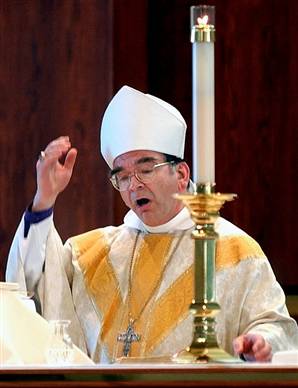 Bishop Robert Duncan argues that the consecration of an openly gay bishop may bring an end to a unified Anglican church.
By Elise Soukup
Bishop Robert Duncan is the leader of the Anglican Communion Network, a coalition of conservative Episcopal bishops that formed after the controversial consecration of gay Bishop V. Gene Robinson. Bishop Duncan spoke with Elise Soukup:
Ms. Soukup: What's the problem with consecrating homosexual bishops?
Bishop Robert Duncan: The love of Jesus is for absolutely everyone; everyone is invited into the church. But the church has always understood that those who lead the church must be converted. They must lead holy lives. So the problem with a bishop in a partnered relationship is that it isn't a holy relationship as God has defined and designed it. It's against God's will as expressed in scripture.
Soukup: I spoke with Bishop Robinson earlier and he reminded me that the church has departed from scripture before. A good example of that is in allowing for divorce.
Duncan: Bishop Robinson is exactly right. We've left scripture before and that's a problem.
Soukup: You have said that because of Bishop Robinson's consecration, the church has now come to a moment where it's impossible to stay together.
Duncan: The difficulty that we face is there are really two reasons people choose the Episcopal church. One is because it is a reliable way to be both evangelical and Catholic and to be completely within scripture and in the tradition of the church. That's certainly how I came to it. There's another group that chooses the church because of its revolutionary actions in regard to leadership, innovation and social issues. So what I'm saying is that since 2003—since the Episcopal Church chose to embrace something that the Christian church had never done and something that the Anglican Communion, in fact, said couldn't be done—it's impossible to hold those two groups together. That's the impossible task.
Soukup: Yet church leaders are currently meeting to try to work out a compromise on this issue. Will the conservative bishops go along with it?
Duncan: The church is seeking to find a middle way with the Christian church and the secular world. It's a problem when you try to do that with moral issues. One of the ways you can say this is, how do you compromise with adultery? Do you just not do it very often? You see that's quite different from compromising on how you say "thee" or "thou." This compromise [with homosexual bishops] would stretch us to a breaking point. The worldwide Anglican Communion has said to the Episcopal Church, "Do you realize that you went outside of the boundaries?" And at this convention, a compromise would say, "Well, maybe we did, but please keep us in anyway."
Soukup: How might a break manifest itself?
Duncan: We would all love for this to be over soon. But I think it's going to take a long time.
Soukup: Is there a chance that conservative bishops will leave the Episcopal Church after the convention?
Duncan: The simple answer is no. The Episcopal Church has acted in such a way that the Anglican Communion has said, "Do you realize that if you continue to go in this direction that you're walking apart?" So one can only imagine that the [Episcopal] church's connectivity [with the worldwide Anglican community] is going to get less and less. But we're not going anywhere.
Soukup: Some congregations have already left the Episcopal Church and joined up instead with foreign Anglican bishops. What is your stance on that?
Duncan: I support those kinds of arrangements. They've been forced out by the actions of this revolutionary, activist leadership and through their own consciences. Again, this is about a worldwide revolution. So there's going to be all kinds of shifting and realigning.
It's a chaotic process. There are already court battles going over property rights and pensions. It's abhorrent. This does not bring people to believe that the Episcopal Church is a good place to bring up children—not only with regards to these social issues, but in the way we behave.
Soukup: Some say that the average lay person doesn't even care about consecrating gay priests. Is this all much ado about nothing?
Duncan: The average layperson may very well not care, but that doesn't make it right or true. The savior of our world stood alone against the whole world and, remarkably, within two centuries the entire empire submitted. A majority opinion doesn't make it right.
Thursday, June 15, 2006
Robinson Declares: I am Not an Abomination to God

Bishop V. Gene Robinson, first openly gay Episcopal Bishop in New Hampshire
By RACHEL ZOLL, AP Religion WriterThe first openly gay Episcopal bishop said at a packed church hearing Wednesday that he is "not an abomination," as he pleaded with the denomination not to bar gays from the office of bishop, even temporarily, for the sake of Anglican unity.
If Episcopalians "see Christ in the faithful lives of our gay and lesbian members," they should have the courage to say so, no matter the potential consequences, said Bishop V. Gene Robinson of New Hampshire.
"I am not an abomination before God," he told the Episcopal General Convention. "Please, I beg you, let's say our prayers and stand up for right."
But Bishop Robert Duncan, who leads a network of conservative Episcopal dioceses that opposed Robinson's consecration, told those at the hearing that the denomination is attempting an impossible task, "which is to hold together the conserving and progressive wings of our church."
"We've reached a moment where it is very difficult, indeed I think we've reached an impossible moment, in holding it together," said Duncan, of the Diocese of Pittsburgh.
The convention will vote over the next few days whether to meet demands from Anglican leaders to impose a moratorium on electing gay bishops and express regret for the turmoil caused by Robinson's 2003 consecration.

Bishop Robinson and Jon Solomese (gay activist) listen to responses from audience at Episcopal convention.
The Episcopal Church is the U.S. arm of the 77 million-member Anglican Communion, the global association of churches that trace their roots to the Church of England. The majority of overseas Anglicans believe the Bible prohibits same-sex relationships, and they want the Americans to follow that teaching or leave the communion.If Anglican leaders dislike the outcome of the General Convention, which runs through June 21, the communion could break apart. Archbishop of Canterbury Rowan Williams, the Anglican spiritual leader, has repeatedly expressed concern about the future of the fellowship.
"We cannot survive as a communion of churches without some common convictions about what it is to live and to make decisions as the Body of Christ," he wrote in a message to the General Convention, which runs through June 21.
Wednesday night's hearing was organized by a committee crafting the Episcopal response to the crisis. The main proposal before delegates does not contain a moratorium on future gay bishops. Instead, it asks dioceses to "exercise very considerable caution" in electing leaders. However, delegates can revise or reject the legislation.

Bishop V. Gene Robinson, first openly gay Episcopal Bishop in New Hampshire
People began standing in line more than an hour before the hearing began to make sure they could get inside. Delegates and visitors filled the vast hotel ballroom to its 1,500-person capacity, while an overflow crowd outside listened on speakers as delegates took turns commenting on how the church should proceed.Many expressed concern about the church's place in the Anglican family, while others said it would go against God to put restrictions on gay clergy.
On the Net:
Episcopal Church
Copyright © 2006 The Associated Press.
Subscribe to:
Posts (Atom)


